

How to Tell if Coffee is Fresh: A Complete Guide
Table of Contents
- How to Tell if Coffee is Fresh: Key Indicators
- Check the Roast Date and What It Means
- How to Tell if Coffee Beans Are Stale
- How Long Coffee Stays Fresh After Grinding
- How to Store Coffee Beans to Keep Them Fresh
- The Bloom Test: A Practical Freshness Check
- Freshness Across Different Brewing Methods
- Frequently Asked Questions
Last Updated: October 7, 2026
How to Tell if Coffee is Fresh: Key Indicators
Fresh beans deliver vibrant, complex flavors; stale coffee tastes flat, one-dimensional, and often bitter.
At Cassien Alan Coffee, we roast to order because the moment coffee is roasted, it begins a countdown.
Here's what we'll cover: reading roast dates, what stale coffee smells and tastes like, how long coffee stays fresh after grinding, storage strategies, and a practical at-home test.
Check the Roast Date and What It Means
The roast date is your most reliable freshness indicator, the actual date the coffee was roasted, not the best-by or packaging date.
Fresh whole beans are best within 2-4 weeks after roasting; ground coffee peaks within 1-2 weeks.
Why the roast date matters more than best-by dates:
- Best-by dates are often conservative estimates (sometimes 6-12 months out)
- Roast dates tell you exactly when the coffee's flavor journey began
- A bag roasted 8 weeks ago is technically safe but tastes noticeably different from one roasted last week
Look for the roast date printed on the bag; reputable roasters put it front and center. If you can't find it, ask the seller, a roaster that hides it probably isn't confident about freshness.
How to Tell if Coffee Beans Are Stale
Stale coffee reveals itself through aroma: fresh beans smell rich and inviting, while stale beans smell flat, dull, or musty.
Aroma and Fragrance Clues
Fresh coffee aroma is complex and inviting, with specific notes, fruity, chocolatey, nutty, floral, or caramel, depending on origin and roast level.
Stale coffee aroma is muted, fragrance fades before flavor does. A bag that smells like cardboard or barely at all is past its prime.
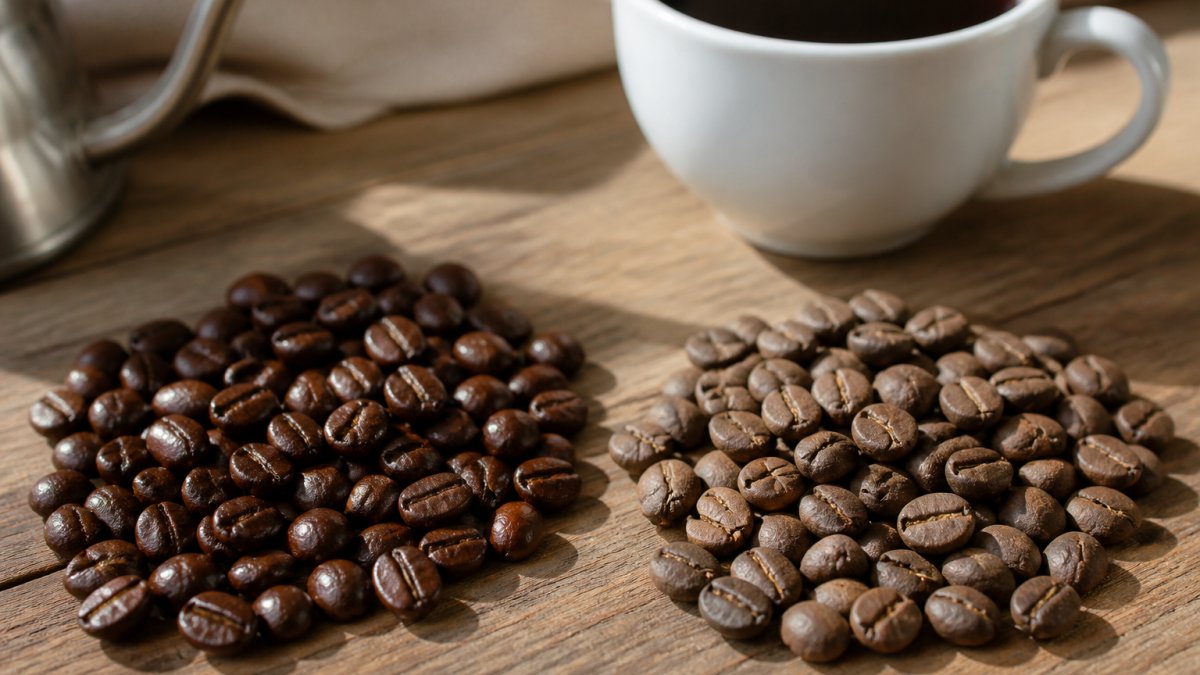
Taste and Flavor Profile Changes
Taste is the final proof. Fresh coffee has dimension, a medium roast might deliver cocoa, citrus, and sweetness in the same cup.
Stale coffee tastes one-note: bitterness without balancing sweetness, or a hollow, watered-down version of what it should taste like.
The difference becomes obvious once you've tasted truly fresh coffee, like switching from flat soda to freshly carbonated soda.
How Long Coffee Stays Fresh After Grinding
Ground coffee loses freshness faster than whole beans, grinding increases surface area, speeding up oxidation and flavor loss.
Whole beans stay fresh for 2-4 weeks after roasting. Ground coffee peaks for 1-2 weeks.
The practical implication: grind just before brewing.
Grinding daily from whole beans is best, but even grinding every other day beats pre-ground coffee that's sat for weeks.
How to Store Coffee Beans to Keep Them Fresh
Storage is where most people lose freshness without realizing it. Generic advice like "keep it cool and dark" doesn't tell you how long coffee actually stays fresh, so here's a practical timeline by form and storage condition.
The Four Enemies of Fresh Coffee
Fresh coffee deteriorates through four main pathways:
- Oxygen: Oxidation breaks down the volatile oils and aromatic compounds that create flavor. The more air contact, the faster this happens.
- Moisture: Water accelerates oxidation and can introduce off-flavors. Steam from a kettle or condensation from temperature swings is enough to cause damage.
- Heat: Warmth speeds up chemical reactions, including oxidation. A bag on a sunny windowsill or next to the stove ages faster than one in a dark cupboard.
A one-way valve lets CO2 escape without letting oxygen in, making valved bags better than zip-tops, but only until you open them.
Practical Freshness Timeline by Coffee Form and Storage Condition
Most guides give a single freshness window. In reality, how long coffee stays fresh depends on the form and how you store it. Here is a realistic timeline based on common storage scenarios:
| Coffee Form | Storage Condition | Peak Freshness | Still Good | Past Prime |
|---|---|---|---|---|
| Whole beans | Sealed bag with one-way valve, unopened | 2-4 weeks after roast | Up to 6-8 weeks | Beyond 8 weeks |
| Whole beans | Airtight container, cool dark place, opened daily | 1-2 weeks after opening | Up to 4 weeks | Beyond 4 weeks |
| Whole beans | Original bag, rolled down, pantry | 3-7 days after opening | Up to 2 weeks | Beyond 2 weeks |
| Ground coffee | Sealed bag, unopened | 1-2 weeks after grinding | Up to 3-4 weeks | Beyond 4 weeks |
| Ground coffee | Airtight container, opened daily | 3-5 days after opening | Up to 1 week | Beyond 1 week |
| Ground coffee | Original bag, rolled down, pantry | 1-2 days after opening | Up to 4 days | Beyond 4 days |
These ranges assume room temperature (68-72°F / 20-22°C) and moderate humidity; hot, humid climates decline faster, cool, dry conditions slightly slower.
The difference is dramatic: an open bag on the counter loses freshness in days, while a sealed container in a dark cupboard stays fresh for weeks.
Should You Freeze Coffee?
The old advice to never freeze coffee is outdated, freezing preserves freshness effectively if done correctly, but it comes with risks.
Single Origin Favorites Sample Pack →
When freezing works:
- For long-term storage of whole beans you will not use within a month
- If you portion beans into small, airtight, vacuum-sealed bags with as little air as possible
- If you let the beans come to room temperature before opening the bag, to prevent condensation
When freezing fails:
- Storing coffee in the original bag with air inside
- Opening and resealing the same bag repeatedly, which introduces moisture each time
- Freezing ground coffee, which has more surface area and degrades faster regardless
For most home brewers, buy only what you'll use in 2-4 weeks, store it airtight in a cool, dark place, and grind just before brewing. If you buy in bulk, freeze in single-use portions.
Storage Containers: What Actually Works
What to look for in a container:
- Airtight seal: A rubber gasket or silicone seal matters more than the material. A glass jar with a loose lid is worse than a plastic container with a tight seal.
- Opaque or dark material: Clear glass looks nice but lets light in. If you use glass, store it in a dark cupboard.
- One-way valve: Some containers include a valve to release CO2. This is helpful for very fresh coffee but not essential if you rest beans before storing.
A mason jar with a tight lid in a dark cupboard outperforms many expensive canisters, the best container is the one you'll actually use.
The Bloom Test: A Practical Freshness Check
The bloom is a simple, visual freshness test you can run at home, but it's also one of the most overinterpreted signals in coffee.
When hot water hits coffee grounds, carbon dioxide trapped during roasting escapes rapidly, creating the bubbling and swelling on the surface.
Here is how to run a controlled bloom test:
Step 1: Use a pour-over or similar method where you can see the grounds. A V60, Chemex, or open dripper works; espresso and French press don't show the bloom clearly.
Step 3: Watch for 30-45 seconds. Fresh coffee bubbles, foams, and rises noticeably, with the bed expanding and crackling.
Step 4: Compare against a known-fresh reference. Bloom a trusted bag side by side; the difference is usually obvious.
Why the Bloom Is Not a Universal Freshness Gauge
The bloom is real, but its intensity depends on more than freshness:
- Roast level: Dark roasts degas faster and often bloom less dramatically than light roasts, even when both are equally fresh. A dark roast roasted three days ago may bloom less than a light roast roasted ten days ago.
- Processing method: Natural and honey-processed coffees can retain more CO2 than washed coffees, leading to bigger blooms at the same age.
- Resting time: Coffee that is too fresh, less than 24-48 hours off the roast, can bloom so aggressively that it disrupts even extraction. Many roasters recommend resting beans for 3-7 days before brewing, especially for espresso.
Coffee professionals treat the bloom as one clue among several, not a pass/fail test. If the bloom is weak but the aroma is rich and the cup tastes sweet and complex, trust your palate over the bubbles.
What to Do When Indicators Disagree
When freshness signals conflict:
- Strong aroma, weak bloom: Likely fresh but heavily rested or a dark roast. Taste it. If it tastes flat, it may be older than the roast date suggests.
- Weak aroma, strong bloom: Rare, but can happen with very fresh coffee that has been stored poorly and lost aromatic compounds while retaining CO2. Check the roast date and storage conditions.
- No bloom, good taste: Possible with immersion brewing or very dark roasts. Do not discard coffee based on bloom alone.
- Strong bloom, harsh taste: Coffee may be too fresh. Let it rest another day or two and try again.
The bloom is a useful, free, fast clue, not a laboratory test. Use it alongside aroma, taste, and the roast date for a complete picture.
Freshness Across Different Brewing Methods
Freshness shows up differently by brewing method.
Pour-over and drip coffee show staleness through flat flavor and weak bloom. Fresh coffee extracts cleanly.
French press is forgiving but still shows the difference. Fresh coffee delivers full body and complexity.
When you order from Cassien Alan Coffee, beans are roasted to order and shipped within days.
Freshness is the difference between coffee that tastes like cardboard and coffee that tastes like an experience.
At Cassien Alan Coffee, every batch is roasted to order. Our single-origin and blend options are available in our Single Origin Favorites Sample Pack and Best Sellers Sample Pack, so you can experience the difference fresh makes.


Frequently Asked Questions
How can you tell if coffee beans are stale?
Stale coffee beans lose their vibrant aroma and develop a flat, muted smell. The color appears dull or faded compared to fresh beans. When brewed, stale coffee tastes bland, lacking the bright, fruity, or chocolatey notes present in fresh coffee. Fresh whole beans should have a rich, fragrant aroma and glossy appearance. If your beans smell like cardboard or taste flat, they've lost their freshness and flavor complexity.
How long does coffee stay fresh after it's ground?
Ground coffee stays fresh for 1-2 weeks when stored in an airtight container away from heat, light, and moisture. Once ground, coffee has significantly more surface area exposed to air, which accelerates oxidation and flavor loss. For optimal flavor, grind whole beans just before brewing. If you must prepare ground coffee in advance, store it airtight, away from heat and light.
Does the roast date matter when buying coffee?
Yes, roast date is critical for freshness. Coffee is best consumed within 2-4 weeks of roasting, when flavors are most vibrant and aromatic compounds are fully present. The roast date differs from the best-by or packaging date, roast date tells you exactly when the beans were roasted. Check the bag for a clearly printed roast date. Avoid coffee with no roast date listed, as you cannot verify its age. Roasted-to-order coffee, like Cassien Alan Coffee, ensures you receive beans at peak freshness.
Is it okay to drink stale coffee?
Stale coffee is safe to drink but tastes significantly worse. Stale coffee loses its complex flavors and develops a dull, rancid, or cardboard-like taste due to oxidation. While drinking stale coffee won't harm you, you're not experiencing the rich, bold flavors you paid for. If your coffee tastes flat or bitter, it's past its prime. To enjoy fresh coffee consistently, store beans in an airtight container, check the roast date, and grind just before brewing.